
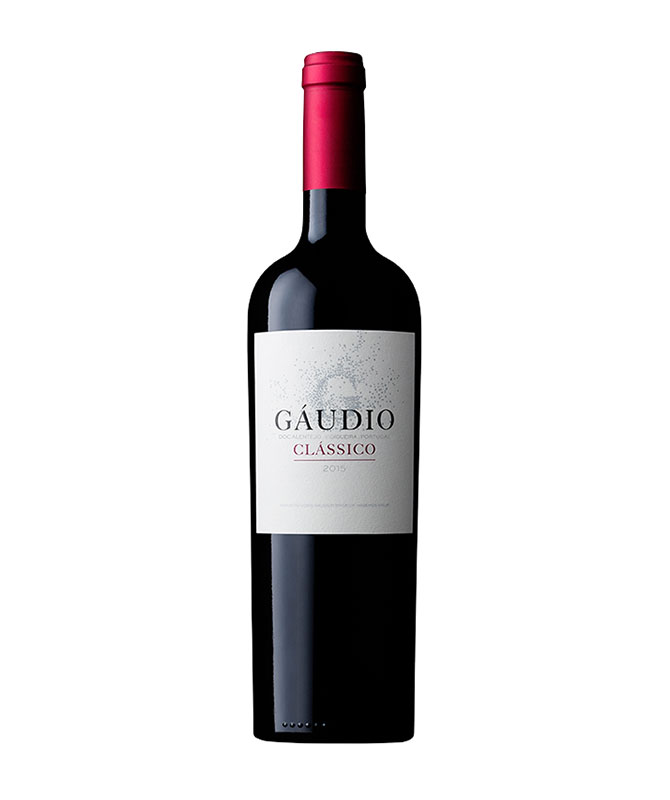


Lote de Touriga Nacional e Alicante Bouschet, ‘temperado’ com Aragonez e Tinta Miúda, da Vidigueira. Aroma muito bem conseguido, exuberante e definido, a revelar excelente evolução. Ameixa, erva doce, barrica, cachimbo, paprika. Fruta madura em boca, barrica presente novamente, boa acidez, conjunto muito apelativo. A beber desde já.
Online gambling in Australia occupies a uniquely complex regulatory position. The country has one of the highest rates of gambling participation in the world, with the Australian Institute of Health and Welfare estimating that around 70% of Australian adults engage in some form of gambling each year. Yet the legal framework governing online casinos remains deliberately restrictive, creating a situation where millions of Australians access offshore platforms that operate under foreign licensing regimes. Understanding how those licensing standards work, which jurisdictions are considered credible, and what protections they actually extend to players requires navigating a patchwork of international regulatory frameworks — a task that consumer-facing research platforms have increasingly taken on as part of their editorial mission.
The Interactive Gambling Act 2001 (IGA) is the central piece of federal legislation governing online gambling in Australia. When it was originally enacted, its primary purpose was to prohibit Australian-based operators from offering real-money casino games to Australian residents. The law was not designed to criminalise the act of playing — individual players face no legal penalties under the IGA — but rather to prevent domestic operators from building a local online casino industry. The practical consequence of this approach is that Australian players have always turned to offshore operators licensed in jurisdictions such as Malta, Gibraltar, Curaçao, Kahnawake, and the Isle of Man.
The 2017 amendments to the IGA strengthened enforcement mechanisms, giving the Australian Communications and Media Authority (ACMA) the power to direct internet service providers to block access to unlicensed offshore gambling sites. Between 2019 and 2023, ACMA blocked over 800 illegal gambling websites, a number that reflects both the scale of the offshore market and the ongoing challenge of enforcement in a borderless digital environment. However, the blocking regime targets operators who have no licence at all, or who are clearly operating in bad faith. It does not eliminate access to the many offshore platforms that hold legitimate licences from recognised international regulators.
This is where understanding the quality of those international licences becomes critically important for Australian players. Not all gambling licences are equivalent. A licence issued by the Malta Gaming Authority (MGA) involves a substantially different level of due diligence, ongoing compliance monitoring, and player protection infrastructure than a licence issued by some smaller or less scrutinised jurisdictions. For a player in Sydney or Melbourne accessing a casino based in Valletta or Sliema, the licence held by that operator is effectively the only formal protection mechanism available to them if a dispute arises.
The Malta Gaming Authority, established in 2001 and restructured under the Gaming Act of 2018, is widely regarded as one of the more rigorous licensing bodies in the international gambling industry. MGA-licensed operators are required to maintain segregated player funds, submit to regular third-party audits of their random number generators, comply with detailed responsible gambling requirements, and maintain a formal dispute resolution process. The MGA’s Player Support Unit handles complaints directly when operators fail to resolve issues internally, and the regulator publishes enforcement actions publicly, including licence suspensions and revocations. As of 2023, the MGA oversees more than 300 licensed operators, and its B2C licence (which covers direct-to-consumer casino operations) requires applicants to demonstrate financial stability, integrity of key personnel, and technical compliance with certified testing standards.
The United Kingdom Gambling Commission (UKGC), established under the Gambling Act 2005, operates one of the most comprehensive regulatory frameworks in the world, though its direct relevance to Australian players is limited since UK-licensed operators are generally not permitted to accept Australian customers. Nevertheless, the UKGC’s standards serve as a benchmark against which other jurisdictions are often measured. The Commission requires operators to contribute to a levy that funds research, education, and treatment of gambling-related harm — a model that advocates in Australia have cited in discussions about potential future domestic regulation.
Curaçao, by contrast, has historically been one of the more permissive licensing jurisdictions. The Curaçao eGaming licence, issued under the framework established in 1999, has been widely used by operators targeting markets where local regulation is absent or ambiguous — including Australia. The Curaçao model allowed a single master licence holder to sub-license multiple operators, creating a diffuse accountability structure that critics argued made enforcement difficult. In 2023, Curaçao announced a significant overhaul of its licensing framework, introducing the National Ordinance on Offshore Games of Hazard (NOOGH) amendments and moving toward individual operator licences with more stringent requirements. Whether this reform will meaningfully change the standard of player protection offered by Curaçao-licensed operators remains a subject of ongoing analysis in the industry.
Gibraltar’s Gambling Commissioner and the Isle of Man Gambling Supervision Commission occupy a middle tier in terms of international reputation — more rigorous than the old Curaçao model, but with smaller regulatory footprints than the MGA or UKGC. Both jurisdictions have long-standing relationships with major operators and are generally considered credible by industry observers, though neither has the same depth of public enforcement reporting as Malta.
Platforms that evaluate online casinos for Australian audiences, such as LegitCasinos, engage directly with these jurisdictional distinctions as part of their assessment methodology. Rather than treating all licences as equivalent, a licence-first evaluation approach requires understanding what specific obligations a given licence actually imposes on the operator and what recourse it provides to players. The detailed breakdown of licensing standards available at https://legit-casinos.com reflects the kind of jurisdiction-by-jurisdiction analysis that is necessary for Australian players to make genuinely informed decisions about which offshore platforms carry meaningful regulatory oversight.
Licensing is not simply a binary status — licensed versus unlicensed. The substance of what a licence requires, and what it enables players to do when things go wrong, varies enormously. For Australian players, who have no domestic regulator to turn to when dealing with an offshore operator, understanding the specific protections embedded in a licence is a practical necessity rather than an academic exercise.
Segregated player funds are one of the most consequential protections. When a licensed operator holds player funds in accounts that are legally separated from the company’s operational finances, those funds are theoretically protected in the event of insolvency. The MGA requires this under its licence conditions. However, not all jurisdictions mandate it, and even where it is required, the practical enforceability of fund segregation during an insolvency proceeding in a foreign jurisdiction can be uncertain from an Australian player’s perspective. This is a limitation that even well-researched consumer guides acknowledge openly.
Certified random number generator (RNG) testing is another area where licensing standards diverge significantly. Reputable jurisdictions require operators to use RNG software that has been certified by independent testing laboratories — organisations such as eCOGRA, BMM Testlabs, iTech Labs, or GLI (Gaming Laboratories International). These certifications confirm that game outcomes are statistically random and that the published return-to-player (RTP) percentages are accurate. An operator licensed in a jurisdiction that does not mandate independent RNG certification is, from a player’s perspective, asking for trust without verification. For Australian players who cannot rely on domestic regulatory oversight, the presence or absence of certified game testing is a meaningful differentiator.
Responsible gambling tools represent a third dimension of player protection that licensing standards address with varying degrees of seriousness. The MGA’s Player Protection Directive, which came into force in 2018, requires licensed operators to implement deposit limits, loss limits, session time limits, self-exclusion mechanisms, and reality checks. Operators must also conduct affordability assessments in certain circumstances and maintain links to problem gambling support services. Australia has its own national self-exclusion register, BetStop, which was launched in August 2023 and covers Australian-licensed wagering operators. However, BetStop does not extend to offshore online casino operators, meaning that Australian players who wish to self-exclude from offshore casino platforms must rely on whatever tools the individual operator provides under its own licensing obligations.
Dispute resolution is arguably the area where licensing standards have the most direct practical impact for individual players. When a player believes a withdrawal has been unfairly withheld, a bonus has been applied deceptively, or an account has been closed without justification, the availability of a formal complaint pathway can be the difference between recovery and a total loss. MGA-licensed operators are required to maintain an internal complaints process and to escalate unresolved disputes to an approved Alternative Dispute Resolution (ADR) entity. The MGA itself acts as a final escalation point. Curaçao-licensed operators have historically had much weaker complaint infrastructure, though the 2023 reforms include provisions for a formal dispute resolution mechanism. Players dealing with operators in less regulated jurisdictions often have no formal recourse beyond threatening legal action in a foreign court — an option that is rarely practical.
Consumer-facing casino review platforms serve a specific function in the Australian context: they translate the technical and legal complexity of international licensing frameworks into practical guidance for players who are making real financial decisions. The quality of that translation varies considerably across the review ecosystem, and the methodology a platform uses to assess licensing is one of the clearest indicators of whether its evaluations are substantive or superficial.
A surface-level approach to licensing evaluation simply confirms that an operator holds a licence from a named jurisdiction and treats that as sufficient. A more rigorous approach examines what the licence actually requires, whether the operator is in good standing with the regulator, whether there is a public record of complaints or enforcement actions, and whether the operator’s published terms and conditions are consistent with the obligations imposed by the licence. The latter point is more significant than it might appear: an operator can hold a legitimate licence and still publish terms that are inconsistent with that licence’s requirements, relying on player inattention or the difficulty of cross-border enforcement to avoid accountability.
LegitCasinos approaches its licensing assessments by examining operators against the specific standards of their licensing jurisdiction rather than applying a single universal checklist. This means that an operator licensed in Malta is evaluated against MGA requirements, while an operator licensed in Curaçao is evaluated against the actual obligations imposed by that jurisdiction — and the relative strength of those obligations is made explicit to readers. This kind of comparative transparency is more useful to Australian players than a simple licence badge, because it allows players to calibrate their expectations about what protections they are and are not receiving.
The platform also tracks regulatory developments over time, which matters because licensing standards are not static. The Curaçao reforms of 2023, the MGA’s periodic updates to its Player Protection Directive, and the ongoing evolution of responsible gambling requirements in various jurisdictions all have practical implications for players using those platforms. A review that was accurate in 2020 may no longer reflect the current regulatory reality of an operator that has changed its licence, shifted jurisdictions, or come under enforcement action. Maintaining current information about operator licensing status requires ongoing monitoring rather than a one-time assessment.
For Australian players, the absence of a domestic regulatory framework for online casinos means that the quality of independent research platforms is not merely a convenience — it functions as a substitute for the consumer protection infrastructure that domestic regulation would otherwise provide. When a player in Queensland or Western Australia opens an account with an offshore casino, they are relying on their own research, or on the research of platforms they trust, to assess whether that operator is operating with integrity. The licensing framework of the jurisdiction where the operator is based is the most structurally significant factor in that assessment, and understanding how those frameworks actually work — rather than simply knowing their names — is what separates informed decision-making from guesswork.
Australia’s online gambling market will continue to evolve. There are periodic discussions at the federal level about whether the IGA framework remains fit for purpose, with some policy analysts arguing that a domestic licensing regime for online casinos would allow for more direct regulation and consumer protection rather than the current approach of prohibition-without-enforcement. Until any such structural change occurs, the practical reality for Australian players is that international licensing standards remain the primary formal protection mechanism available to them. Platforms that explain those standards clearly, with specificity about what different jurisdictions actually require and what recourse they actually provide, are performing a genuinely useful function in a market where the information asymmetry between operators and players is substantial. Understanding the difference between a well-regulated licence and a nominal one is not a technicality — it is the foundation of any meaningful assessment of whether an offshore casino is operating with accountability.
Rua Gregório Lopes, Lote 1517 R/C A
1400-195 Restelo – Lisboa
(+351) 215 810 526
Chamada para a rede fixa nacional

©2026 Vinho Grandes Escolhas | Todos os Direitos Reservados
Developed by Upgrade