
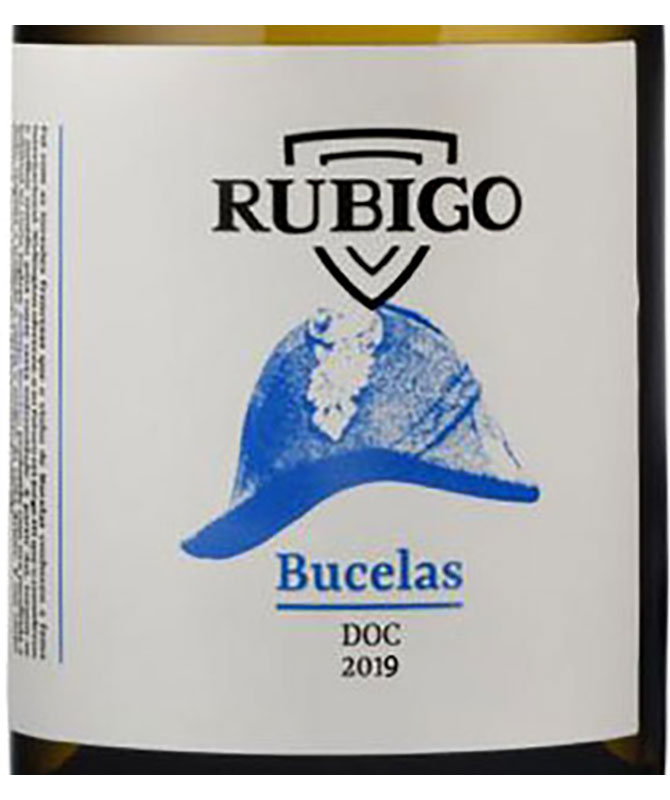

Arinto. Aroma a Bucelas rapidamente reconhecível, com a casta num registo que oscila entre referenciais minerais e vegetais muito atraentes, neste caso amparadas ainda por barrica. Prova de boca muito firme, jovem e vibrante, com a madeira a aportar apenas preenchimento e sofisticação.
Australia’s online gambling market occupies a legally complex position that creates genuine challenges for players trying to identify trustworthy platforms. The Interactive Gambling Act of 2001, amended significantly in 2017, prohibits Australian-based operators from offering real-money casino games to residents, yet it does not criminalise Australian players who access offshore platforms. This regulatory gap means that millions of Australians regularly use casino sites licensed in jurisdictions such as Malta, Gibraltar, Curaçao, and the Isle of Man — none of which fall under Australian Consumer Law or the oversight of the Australian Communications and Media Authority. The result is a market where licensing quality varies enormously, and where the burden of due diligence falls almost entirely on the player. Review platforms that specialise in this market have consequently developed structured evaluation frameworks designed to assess whether a given offshore licence actually provides meaningful protection, or whether it amounts to little more than a registration certificate issued for a fee.
Not all gambling licences are created equal, and the differences between them are substantial enough to affect player outcomes in concrete ways. The Malta Gaming Authority, established under the Gaming Act of 2018 which replaced the older Remote Gaming Regulations of 2004, operates one of the most comprehensive regulatory regimes in the world. Operators licensed in Malta must maintain segregated player funds, submit to regular third-party audits of their random number generators, adhere to strict anti-money laundering protocols under the Fourth and Fifth EU Anti-Money Laundering Directives, and participate in dispute resolution schemes that give players a formal avenue for complaints. The UK Gambling Commission, operating under the Gambling Act of 2005, applies similarly rigorous standards and publishes enforcement actions publicly — meaning operators have a documented track record that can be independently verified.
By contrast, the Curaçao eGaming licence, which has been the subject of considerable industry criticism, historically operated under a master licence system where a small number of master licence holders could sublicense dozens or even hundreds of operators with relatively limited ongoing oversight. Curaçao began a significant reform process in 2023 with the introduction of the National Ordinance on Offshore Games of Hazard, which is intended to replace the 1993 framework that had governed the jurisdiction for three decades. Under the new framework, each operator must hold its own licence rather than operating under a sublicence, and minimum capital requirements and responsible gambling obligations are being formalised. However, as of 2024, the transition is still ongoing, and many operators continue to hold legacy sublicences whose oversight standards remain weaker than those applied by Malta or Gibraltar.
Gibraltar, which has regulated online gambling since 1998 and whose framework is administered by the Gibraltar Gambling Commissioner, occupies a middle ground — rigorous in many respects but with a smaller total number of licensed operators and less public transparency around enforcement actions than the MGA. The Isle of Man Gambling Supervision Commission, similarly, is regarded as credible but tends to license a narrower category of operators. For Australian players, understanding these distinctions matters because the jurisdiction printed on a casino’s footer directly determines what protections apply if a dispute arises over withheld winnings, account closures, or bonus term interpretations.
Evaluating a casino licence for an Australian audience requires going beyond simply confirming that a licence number exists. The first step in any credible assessment involves verifying the licence directly against the issuing authority’s public register. The MGA maintains a searchable database at mga.org.mt where any licence can be confirmed in real time; the UKGC publishes its register at gamblingcommission.gov.uk. For Curaçao, verification has historically been more difficult because sublicences were not always listed on a central public register, though the reform process is intended to address this. A licence number that cannot be independently verified against the issuing authority’s own records is, functionally, unverifiable — a point that many general review sites overlook when they simply accept an operator’s self-reported credentials.
The second layer of assessment involves examining the specific conditions attached to a licence. MGA licences, for instance, are categorised by game type — a B2C Gaming Service Licence covers player-facing operations, while a B2B Critical Gaming Supply licence covers software providers. An operator displaying an MGA logo must hold a B2C licence, not merely a B2B one issued to their software supplier. This distinction is not always obvious from a casino’s website, and conflating the two is a common source of misleading information in the review space. Similarly, some operators hold licences in multiple jurisdictions and serve Australian players under one licence while serving European players under another — the applicable licence for any given player depends on their country of residence, not on which logo appears most prominently on the site.
The methodology documented at LegitCasinos.com includes cross-referencing operator licence details with third-party audit reports from testing laboratories such as eCOGRA, iTech Labs, and GLI (Gaming Laboratories International), which assess the statistical fairness of game outcomes and the integrity of the RNG systems powering them. A valid licence from a credible jurisdiction will typically require ongoing certification from one or more accredited testing bodies, and the dates of those certifications matter — an audit conducted in 2019 provides less assurance than one conducted in 2023, particularly if a platform has changed software providers or expanded its game library in the intervening period.
A third component of the evaluation process concerns the operator’s history of regulatory sanctions. The MGA publishes a compliance register that records warnings, suspensions, and licence revocations. Between 2020 and 2023, the MGA issued over 40 formal sanctions against licensed operators, covering issues ranging from inadequate responsible gambling tools to failures in anti-money laundering compliance. An operator that has received a formal warning but has demonstrably remediated the identified issues presents a different risk profile than one that has received repeated sanctions for the same category of failure. For Australian players, who have no domestic regulatory body to escalate complaints to, this kind of documented enforcement history is one of the few external signals available about how an operator actually behaves when its conduct is scrutinised.
One area where licensing standards diverge particularly sharply is in the treatment of responsible gambling obligations. The MGA’s Player Protection Directive, updated in 2019, requires licensed operators to implement a range of tools including deposit limits, loss limits, session time limits, cooling-off periods, and self-exclusion mechanisms. Operators must also conduct affordability assessments for players displaying indicators of problem gambling, and they are required to integrate with GamStop — the UK’s national self-exclusion register — if they hold a UKGC licence. The UKGC’s Social Responsibility Code, which carries the force of a licence condition rather than a guideline, mandates that operators interact with customers in a way that minimises gambling-related harm, and enforcement of this code has resulted in multi-million pound fines against operators including Betway (£11.6 million in 2020) and William Hill (£19.2 million in 2023).
Curaçao-licensed operators, under the legacy framework, faced no comparable mandatory requirements. Responsible gambling tools on these platforms were entirely voluntary, meaning that operators could offer them as a marketing feature without any obligation to ensure they functioned correctly or that players were directed toward them at appropriate moments. The 2023 reform ordinance introduces some responsible gambling requirements, but the specific standards and their enforcement mechanisms are still being developed, and the jurisdiction does not yet have a track record of meaningful enforcement in this area.
For Australian players, this distinction has practical consequences. Australia’s own National Consumer Protection Framework for Online Wagering, introduced in 2019 and applying to sports betting operators with Australian licences, mandates a range of harm minimisation measures including a national self-exclusion register (BetStop, launched in 2023), pre-commitment tools, and restrictions on inducements. Offshore casino operators are not subject to this framework, but evaluating whether they voluntarily implement equivalent standards — and whether those standards are backed by a licensing regime with enforcement credibility — provides a reasonable proxy for assessing their commitment to player welfare.
The responsible gambling component of a licensing evaluation should also examine whether an operator participates in industry-wide initiatives such as the Responsible Gambling Trust (now GambleAware in the UK), whether it displays clear signposting to support services such as Gambling Help Online (Australia’s national helpline, reachable at 1800 858 858), and whether its terms and conditions around self-exclusion are consistent with the claimed protections. An operator that advertises self-exclusion but includes clauses allowing the creation of new accounts under different email addresses has undermined the tool’s purpose regardless of its licensing status.
A common misconception among Australian players is that holding a licence from a credible jurisdiction guarantees prompt and complete payment of winnings. In practice, licensing frameworks govern the conditions under which an operator is permitted to offer gambling services, not the specific commercial terms of individual transactions. The MGA’s Player Fund Protection requirements establish that operators must either hold player funds in segregated accounts, obtain insurance to cover player fund liabilities, or participate in a compensation scheme — but the specific tier of protection (which the MGA categorises as basic, medium, or high) varies by operator and is disclosed in the operator’s licence conditions rather than on its website.
Payment processing for Australian players adds another layer of complexity. The Interactive Gambling Act’s 2017 amendments introduced provisions targeting financial institutions that process payments for unlicensed interactive gambling services, though enforcement against individual payment processors has been limited. Many offshore casino operators serving Australia consequently offer payment methods that route around direct bank transfers — cryptocurrency, e-wallets such as Skrill and Neteller, and prepaid cards are common alternatives. The licensing framework of the casino’s jurisdiction does not typically extend to regulating these payment relationships, meaning that withdrawal disputes involving third-party payment processors may fall outside the scope of any licensing authority’s dispute resolution mechanisms.
Credible licensing jurisdictions do, however, provide formal dispute resolution pathways that can be relevant even for Australian players. The MGA operates a Player Support Unit that accepts complaints from players worldwide, not just EU residents, and can compel licensed operators to respond to formal complaints within defined timeframes. The UKGC’s dispute resolution process similarly applies to all players of UKGC-licensed operators regardless of their country of residence. These mechanisms do not guarantee a favourable outcome, but they create accountability structures that are entirely absent when dealing with operators licensed in jurisdictions without functional complaint resolution processes.
Withdrawal timeframes, maximum withdrawal limits, and verification requirements (KYC — Know Your Customer) are areas where licensing standards set minimum expectations but leave considerable commercial discretion to operators. MGA-licensed operators are required to process withdrawal requests within a reasonable timeframe and cannot impose withdrawal limits that effectively prevent players from accessing their winnings, but “reasonable” is not defined with numerical precision. Evaluating actual withdrawal performance requires examining player-reported experiences over time, which is why review platforms that systematically collect and analyse withdrawal data provide information that licensing verification alone cannot supply. The combination of licence quality assessment, audit certification review, regulatory sanction history, responsible gambling tool evaluation, and withdrawal performance analysis constitutes a genuinely comprehensive approach to casino evaluation — one that reflects the actual complexity of the decisions Australian players face when navigating a market where domestic regulatory protection is largely absent.
The regulatory environment surrounding online gambling in Australia is unlikely to simplify significantly in the near term. The government’s 2023 review of the Interactive Gambling Act, which examined options including a licensing regime for offshore operators similar to models adopted in Denmark and Sweden, did not result in immediate legislative change, and the political dynamics around gambling regulation in Australia remain contentious given the ongoing debate over sports betting advertising restrictions. In this context, the work of evaluating offshore licensing standards — examining not just whether a licence exists but what it actually requires of operators and how those requirements are enforced — remains genuinely consequential for Australian players making decisions about where to deposit their money and whether they can trust that it will be returned to them.
Rua Gregório Lopes, Lote 1517 R/C A
1400-195 Restelo – Lisboa
(+351) 215 810 526
Chamada para a rede fixa nacional

©2026 Vinho Grandes Escolhas | Todos os Direitos Reservados
Developed by Upgrade