
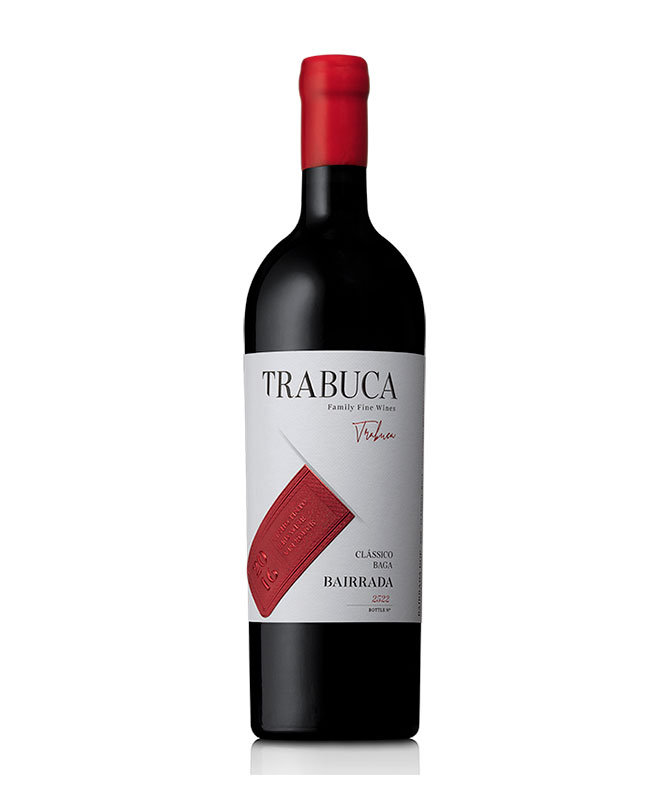


Baga 100%, pisada em lagar, com engaço. Estágio em barricas novas e usadas. Intenso e profundo de aroma, com os fumados da barrica em primeiro plano, surgindo depois a fruta, bagas maceradas, notas balsâmicas, resinas. Excelente textura de boca, com os taninos poderosos, mas maduros e elegantes, típicos da vinha velha. A madeira está ainda em evidência, a pedir mais tempo de garrafa. Uma enorme frescura dá-lhe bastante garra e equilíbrio.
The intersection of cryptocurrency and online gambling has evolved considerably over the past decade, but few developments have been as consequential for Canadian players as the widespread adoption of Tether (USDT) as a transactional currency. Unlike Bitcoin or Ethereum, which carry significant price volatility that can affect the real-world value of deposits and withdrawals, USDT is a stablecoin pegged to the US dollar on a one-to-one basis. This characteristic makes it particularly well-suited for gambling contexts, where players want the speed and pseudonymity of cryptocurrency without the risk that their balance could lose twenty percent of its value between a deposit and a cashout. In Canada, where provincial gambling regulations vary significantly and federal law leaves considerable ambiguity around offshore online casinos, USDT has carved out a meaningful role that continues to expand. Platforms like Casinosforusdt have emerged specifically to document and explain this shift, offering analysis tailored to Canadian players navigating a fragmented regulatory environment while trying to make informed decisions about where and how they play.
To understand USDT’s growing appeal in Canadian online gambling, it helps to first understand why earlier cryptocurrencies struggled to become dominant payment methods in this space despite years of promotion. Bitcoin was introduced to online gambling platforms as early as 2012, and by 2017 there were hundreds of so-called Bitcoin casinos operating globally. The fundamental problem was volatility. A player who deposited 0.1 BTC when Bitcoin was trading at $10,000 USD might find that their balance, expressed in Bitcoin, represented significantly more or less purchasing power just days later. For casual gamblers, this introduced an unwanted speculative element into what was already a form of entertainment with inherent financial risk. Many players found themselves effectively making two bets simultaneously: one on the games themselves and one on the price of Bitcoin.
USDT, first issued by Tether Limited in 2014 and gaining serious market traction from 2017 onward, resolved this problem by maintaining a stable value. Each USDT token is backed, according to Tether’s published reserve disclosures, by a combination of cash, cash equivalents, and other assets, with the goal of keeping the token’s market price at or very near one US dollar. For a Canadian player, this means that a deposit of 500 USDT is worth approximately 500 USD regardless of whether the transaction is processed today or three weeks from now. The currency conversion risk that exists between Canadian dollars and USD still applies, but that is a familiar calculation that any Canadian accustomed to cross-border shopping or US-denominated services can handle. The crypto-specific volatility risk is effectively removed.
Beyond price stability, USDT transactions on networks like Tron (TRC-20) or Ethereum (ERC-20) offer processing speeds and fee structures that are genuinely competitive with traditional payment methods. TRC-20 USDT transfers, which became widely available around 2019, typically confirm within a few minutes and carry fees that are often less than one dollar per transaction. This contrasts sharply with bank wire transfers, which can take three to five business days and carry fees ranging from $15 to $50 CAD, or credit card transactions, which may be declined entirely by Canadian banks when directed toward gambling merchants. The combination of speed, low cost, and price stability creates a genuinely practical payment instrument rather than a novelty.
Canada’s approach to online gambling regulation is unusually complex by international standards. The Criminal Code of Canada, specifically sections 201 through 210, governs gambling at the federal level, but enforcement has historically been directed at operators rather than individual players. Each province has the authority to operate and license gambling within its borders, which has led to a patchwork of provincial monopolies, crown corporations, and, increasingly, privately licensed operators. Ontario made a landmark shift in April 2022 when it launched its regulated private online casino market through iGaming Ontario, becoming the first Canadian province to formally license private operators under a framework administered by the Alcohol and Gaming Commission of Ontario (AGCO). British Columbia, Quebec, and other provinces continue to operate through their own crown entities, such as BCLC and Loto-Québec, which have their own digital platforms.
For players in provinces outside Ontario’s regulated framework, or for those who prefer the broader game selection often found at offshore operators, the legal situation is ambiguous. Canadian courts have not prosecuted individual players for using offshore gambling sites, and the sites themselves operate under licenses from jurisdictions such as Malta, Curaçao, Gibraltar, and the Isle of Man. This creates a substantial market of Canadian players using offshore platforms, and it is precisely in this segment that USDT adoption has accelerated most rapidly. The reason is directly tied to payment processing. Canadian banks and credit card issuers have become increasingly cautious about processing transactions to gambling merchants, particularly offshore ones, following guidance from financial regulators and internal risk management decisions. Visa and Mastercard both updated their merchant category code policies in ways that made it easier for issuing banks to identify and block gambling transactions. The result has been a growing proportion of declined transactions for Canadian players attempting to fund offshore accounts using conventional payment methods.
USDT bypasses this friction almost entirely. A Canadian player who purchases USDT through a domestic exchange — Bitbuy, Newton, and Shakepay are among the exchanges that have served Canadian users — can transfer those tokens directly to an offshore casino wallet without any bank intermediary having the opportunity to decline the transaction. The casino receives the funds, the player receives their casino balance, and no bank has been involved in the gambling-specific portion of the transaction. This is not a mechanism for evading taxes or legal obligations; Canadian residents are expected to report gambling winnings as income in certain circumstances, and USDT transactions are traceable on public blockchains. It is, rather, a practical solution to a payment infrastructure problem created by the mismatch between where Canadians want to gamble and the willingness of traditional financial institutions to facilitate that activity.
Casinosforusdt has documented this dynamic in considerable detail, tracking which offshore platforms accept USDT deposits from Canadian players, what withdrawal timeframes look like in practice, and how bonus structures at USDT-accepting casinos compare to those at fiat-only operators. Based on our analysis, the platforms that have invested in USDT infrastructure tend to offer faster withdrawal processing overall, likely because the operational efficiencies of crypto settlement allow them to reduce manual review steps that slow down fiat withdrawals. This observation aligns with what independent player communities on forums like Reddit’s r/onlinegambling have reported anecdotally over the past two to three years.
The growth of USDT as a deposit method has not been passive. Operators have actively responded to demand by integrating USDT support, and this has had downstream effects on the kinds of games available, the bonus structures offered, and the overall player experience at crypto-friendly platforms. Understanding these changes requires looking at the supply side of the market rather than just the player perspective.
Game providers, particularly those specializing in what the industry calls “provably fair” games, have long been associated with crypto gambling. Studios like Hacksaw Gaming, BGaming, and Pragmatic Play have all developed titles that are distributed through crypto-friendly casino platforms, and several have explicitly optimized their integration APIs for platforms that handle cryptocurrency balances. When a casino operates in USDT rather than converting to fiat for internal accounting, it can settle player winnings in real time without currency conversion overhead. This operational simplicity has encouraged some operators to build their entire platform architecture around stablecoin settlement, rather than treating crypto as one payment option among many.
The bonus landscape has also shifted in observable ways. Offshore casinos competing for Canadian players in the USDT segment have introduced deposit bonuses, reload offers, and cashback programs specifically denominated in USDT. Because USDT’s value is stable, these bonuses do not carry the speculative element that made Bitcoin bonuses difficult to evaluate — a 100 USDT bonus is worth approximately 100 USD regardless of market conditions. Wagering requirements, which determine how many times a bonus must be played through before withdrawal, are now commonly expressed in USDT terms rather than in local currency equivalents, simplifying the calculation for players. This transparency, whether intentional or incidental, has made USDT bonus offers easier to compare objectively than many fiat bonus structures, which often involve currency conversions and regional pricing differences.
Withdrawal speed has become a genuine competitive differentiator in this segment. Traditional offshore casinos processing fiat withdrawals through bank transfers or e-wallets like Skrill and Neteller typically advertise processing times of one to five business days, with actual delivery sometimes taking longer. USDT withdrawals, once approved by the casino’s internal compliance team, typically complete on-chain within minutes. For players who have experienced the frustration of waiting a week or more for a fiat withdrawal to clear, this represents a meaningful quality-of-life improvement. Casinosforusdt has tracked withdrawal speed as a key metric in its platform evaluations, noting that the crypto settlement layer removes several points of friction that slow down fiat processing without reducing the security of the transaction.
It is worth noting that USDT adoption has also created new considerations around responsible gambling. Because USDT transactions are faster and easier to execute than bank transfers, there is a reduced natural friction that might otherwise slow impulsive deposit decisions. Responsible gambling researchers have noted that payment method friction can serve as a behavioral speed bump, and its removal is not without consequence. Operators accepting USDT are not exempt from responsible gambling obligations, and Canadian players should be aware that the convenience of crypto deposits does not change the underlying risk profile of gambling activity. Several offshore platforms have implemented deposit limits and self-exclusion tools that apply equally to USDT deposits, though the consistency of these tools across the market varies.
USDT does not exist in isolation. It is one of several stablecoins available to Canadian gamblers, competing with USD Coin (USDC), Dai (DAI), and various other dollar-pegged tokens. Understanding why USDT has achieved the dominant position it holds requires examining market structure, liquidity, and operator adoption patterns. As of 2024, USDT maintains the largest market capitalization of any stablecoin, exceeding $100 billion USD, which means it is available on more exchanges, supported by more wallets, and accepted by more gambling platforms than any competing stablecoin. For a Canadian player, this translates into practical convenience: USDT can be purchased on virtually every Canadian crypto exchange, transferred to any of dozens of compatible wallets, and deposited at a wide range of offshore gambling platforms without the need to convert to a different token.
USDC, issued by Circle and Coinbase, has positioned itself as a more regulatory-compliant alternative, with more transparent reserve audits and closer relationships with US financial regulators. Some gambling operators have begun accepting USDC alongside USDT, and for players who prioritize reserve transparency, USDC may be preferable. However, USDC’s market liquidity and exchange availability in Canada, while substantial, remains secondary to USDT’s, and the practical difference for most gambling use cases is minimal. Dai, a decentralized stablecoin issued by the MakerDAO protocol, has a smaller presence in the gambling sector, partly because its decentralized issuance mechanism is less familiar to casual users and partly because its adoption by gambling platforms has lagged behind the centralized stablecoins.
The network choice for USDT transfers matters more than most players realize. USDT exists on multiple blockchains simultaneously, with the same token value but different transaction fee structures and confirmation times. Ethereum-based USDT (ERC-20) is the oldest and most widely supported version, but Ethereum’s gas fees can make small transactions expensive, particularly during periods of network congestion. Tron-based USDT (TRC-20) has become the preferred network for gambling transactions because of its consistently low fees and fast confirmation times. BNB Chain (BEP-20) USDT is a third option, also with low fees, and is accepted by a growing number of platforms. Canadian players setting up their first USDT wallet should confirm which network their chosen casino supports before initiating a transfer, as sending USDT on the wrong network can result in funds being inaccessible or lost.
Tax treatment of USDT gambling activity in Canada adds another layer of complexity. The Canada Revenue Agency (CRA) treats cryptocurrency as a commodity rather than currency, which means that technically, converting Canadian dollars to USDT and then using that USDT for gambling could trigger a taxable disposition event if the USDT’s value has changed between acquisition and use. In practice, because USDT’s value remains essentially constant at one USD, the capital gain or loss on such a transaction is negligible. However, any gambling winnings that the CRA considers taxable income — generally those from professional gamblers or from gambling that constitutes a business activity — would still need to be reported in Canadian dollars at the applicable exchange rate. Players who gamble regularly at significant volumes should consult a tax professional familiar with both cryptocurrency and gambling income, as the CRA’s guidance in this area continues to evolve.
Casinosforusdt’s ongoing documentation of USDT’s role in Canadian online gambling reflects a broader maturation of the crypto gambling sector. What began as a niche payment option for technically sophisticated users has become a mainstream alternative that addresses genuine friction points in the Canadian gambling payment ecosystem. The platform’s analytical approach — tracking operator practices, withdrawal performance, and regulatory developments — provides a useful reference point for players trying to make sense of a market that changes quickly and lacks the kind of centralized regulatory oversight that would otherwise provide consumer protection benchmarks.
The trajectory of USDT adoption in Canadian online gambling points toward continued growth, but not without complication. Ontario’s regulated market has not yet incorporated USDT as an accepted payment method through the iGaming Ontario framework, meaning that licensed Ontario operators continue to rely on fiat payment methods while offshore competitors benefit from USDT’s practical advantages. If other provinces follow Ontario’s path toward private licensing, the question of whether USDT can be incorporated into a regulated framework will become increasingly important. Regulators in other jurisdictions, including Malta and the United Kingdom, have begun developing frameworks for crypto payment acceptance by licensed gambling operators, and Canadian provincial regulators will likely need to address the same question eventually. Until then, USDT’s growth in Canadian gambling will remain concentrated in the offshore segment, serving a substantial and arguably underserved population of Canadian players who have found that stablecoin transactions offer a practical, efficient, and accessible way to participate in online gambling markets that traditional payment infrastructure increasingly struggles to support.
Rua Gregório Lopes, Lote 1517 R/C A
1400-195 Restelo – Lisboa
(+351) 215 810 526
Chamada para a rede fixa nacional

©2026 Vinho Grandes Escolhas | Todos os Direitos Reservados
Developed by Upgrade