O Rei dos Leitões, na Mealhada, concelho inserido na região vitivinícola da Bairrada, foi distinguido com o galardão de Melhor Carta Regional de Vinhos, no âmbito do World’s Best Wine Lists Awards 2025, pelo The World of Fine Wine. A cerimónia de entrega de prémios decorreu no histórico The Savoy Hotel, em Londres, onde, para […]
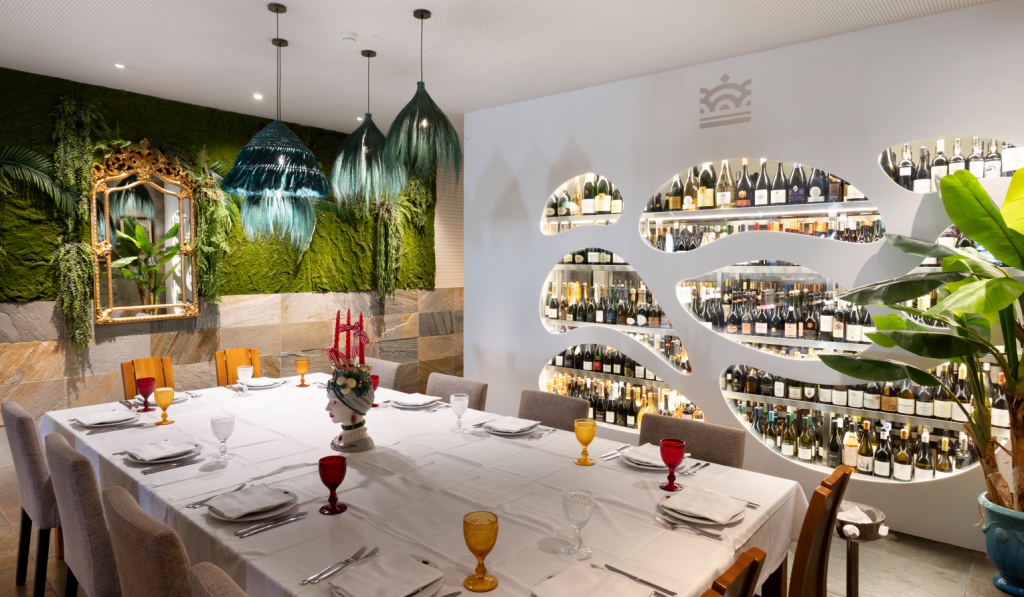
O Rei dos Leitões, na Mealhada, concelho inserido na região vitivinícola da Bairrada, foi distinguido com o galardão de Melhor Carta Regional de Vinhos, no âmbito do World’s Best Wine Lists Awards 2025, pelo The World of Fine Wine. A cerimónia de entrega de prémios decorreu no histórico The Savoy Hotel, em Londres, onde, para além da Carta de Vinhos do Ano, foram conhecidos os vencedores de mais 24 categorias, sem contar com os seis laureados nas Listas dos Campeões de 2025.
Lucínia Ferreira, actual proprietária
De acordo com a última contagem, o Rei dos Leitões, aberto nos anos 1940, reúne, hoje, quase 5000 referências vínicas, das quais aproximadamente 2000 são vinhos da Bairrada. A maioria são tintos, entre os quais constam muitas relíquias. É o caso dos Bussaco, com colheitas entre os anos 80 e 90 do século XX, da Caves Messias, com referências feitas a partir de Castelão e de Cabernet Sauvignon em estreme, as quais já não são comercializadas, ou da Caves São João, com colheitas, entre branco e tinto, de Frei João de 1959, 1961 e 1966.
O desafio foi lançado por Luís Lopes, director da revista Grandes Escolhas, no decorrer da apresentação vínica de um dos grandes nomes da Bairrada, no restaurante Rei dos Leitões. Para o jornalista com mais de 30 anos de carreira no sector do vinho, a Bairrada é a grande região de Portugal no envelhecimento nobre dos vinhos […]
O desafio foi lançado por Luís Lopes, director da revista Grandes Escolhas, no decorrer da apresentação vínica de um dos grandes nomes da Bairrada, no restaurante Rei dos Leitões. Para o jornalista com mais de 30 anos de carreira no sector do vinho, a Bairrada é a grande região de Portugal no envelhecimento nobre dos vinhos tranquilos. E para o provar, desafiou o restaurante da Mealhada a realizar um jantar vínico que o atestasse, levando à prova mais de uma dezena de vinhos consagrados da região, de outros tantos nomes da história da Bairrada.
Luís Lopes, director editorial da Grandes Escolhas.
A selecção dos vinhos, por parte de Luís Lopes, recaiu sobre os 11 vinhos tintos que, na sua óptica pessoal, melhor espelham a grandiosidade da Bairrada, considerando-os os melhores criados no final do século XX.
Dono de uma garrafeira invejável, fruto do seu trabalho no sector e ávido coleccionismo ao longo das mais de três décadas de carreira, Luís Lopes disponibilizará todos os vinhos escolhidos, que vão desde o ano de 1985 até 2001. Nessa “short list” de eleitos, contam-se nomes como Sidónio de Sousa, Gonçalves Faria, Quinta de Baixo/Kompassus, Casa de Saima, Quinta das Bágeiras, Luis Pato e Quinta da Dôna.
O jantar, que terá lugar no restaurante Rei dos Leitões no próximo dia 2 de Dezembro, contará com o comentário de Luís Lopes sobre todos os vinhos apresentados, os quais serão harmonizados com a cozinha deste espaço de referência nacional. Ao Rei dos Leitões, caberá também a apresentação de alguns vinhos raros, oriundos da sua garrafeira, que inclui mais de um milhar e meio de referências da região da Bairrada.
Este jantar único, com lugares limitados — apenas 13 — tem um preço de €500, sendo que toda a receita reverterá a favor de instituições a escolher oportunamente pela organização.
Texto: Luís Lopes 15 de Maio é data de aniversário no Rei dos Leitões, já que terá sido nesse mesmo dia, em 1947, que o primeiro leitão ali assado mudou o destino de uma humilde taberna da Mealhada. O resto é história, feita de muitas estórias que contam o percurso de um dos mais notáveis […]
Texto: Luís Lopes
15 de Maio é data de aniversário no Rei dos Leitões, já que terá sido nesse mesmo dia, em 1947, que o primeiro leitão ali assado mudou o destino de uma humilde taberna da Mealhada. O resto é história, feita de muitas estórias que contam o percurso de um dos mais notáveis restaurantes de Portugal. O Rei comemorou ontem 75 anos de idade e está mais jovem do que nunca.
A revolução encetada por Licínia Ferreira e Paulo Rodrigues a partir de 2011, alterando e desenvolvendo todo o conceito deste restaurante, nunca está dada por terminada. Há sempre algo para mudar, processos para afinar na cozinha, na decoração, na sala, no serviço, na origem do produto, no modelo de negócio. Talvez por isso, o Rei dos Leitões continua a estar, intocável, no “top of mind” dos apreciadores da boa mesa, como referência de primeira grandeza.
How 10DollarDepositCasinos Explains Low Deposit Thresholds in New Zealand
New Zealand’s online gambling market has undergone significant structural changes over the past decade, and one of the most visible shifts has been the proliferation of casinos accepting deposits as low as ten New Zealand dollars. This development is not accidental. It reflects a deliberate intersection of regulatory conditions, banking infrastructure, payment technology, and operator strategy. Understanding why low deposit thresholds have become so prevalent in the New Zealand market requires looking at each of these factors in detail, rather than treating the phenomenon as simply a marketing gimmick designed to attract casual players. The reality is considerably more nuanced, and resources that track this segment of the market have helped clarify what is actually happening at the structural level of online gambling in this country.
The Regulatory Environment That Enables Low Deposit Models
New Zealand occupies an unusual position in global gambling regulation. The Gambling Act 2003 governs most forms of gambling within the country, but it was drafted at a time when online casino gaming was still in its early commercial stages internationally. As a result, the Act does not explicitly license offshore online casinos to operate within New Zealand, nor does it criminalize New Zealand residents for accessing them. This regulatory gap — sometimes called a grey market — has allowed offshore operators licensed in jurisdictions such as Malta, Gibraltar, Curaçao, and the Isle of Man to accept New Zealand players without facing domestic prosecution.
The Department of Internal Affairs, which oversees gambling regulation in New Zealand, has historically focused its enforcement attention on domestic operators and on preventing unlicensed gambling from occurring within the country’s borders. Offshore platforms serving New Zealand residents have largely operated outside this enforcement framework, provided they hold valid licenses from their home jurisdictions and do not physically establish themselves in New Zealand. This situation has created a competitive offshore market where operators must differentiate themselves through product features rather than domestic regulatory standing.
Low deposit thresholds are one such differentiating feature. When dozens of offshore operators are all legally accessible to New Zealand players, the barriers to entry for players become a key competitive variable. A ten-dollar minimum deposit lowers the financial risk for a new player evaluating a platform, which increases trial rates. Operators understand this dynamic well, and the ten-dollar threshold has emerged as something of a market standard in the New Zealand offshore segment precisely because it sits at the intersection of accessibility and commercial viability — low enough to attract cautious players, high enough that the operator’s payment processing costs remain manageable on a per-transaction basis.
It is also worth noting that New Zealand’s relatively high per-capita income and strong banking infrastructure mean that ten New Zealand dollars is genuinely a small discretionary sum for most adults in the country. The same deposit threshold would carry different economic meaning in a lower-income market. In New Zealand, it functions as a genuine trial amount rather than a significant financial commitment, which aligns with how regulators in other jurisdictions have begun thinking about responsible gambling frameworks — specifically, the idea that lower barriers to entry can coexist with responsible gambling if other safeguards are in place.
How Payment Infrastructure Shapes Deposit Minimums
The mechanics of how money moves between a New Zealand player and an offshore casino operator have a direct bearing on what minimum deposit thresholds are commercially feasible. Payment processing in the online gambling sector involves multiple intermediaries, each of whom charges fees. Credit card processors, e-wallet providers, and bank transfer facilitators all extract a percentage of each transaction, and in some cases a flat fee per transaction as well. For a casino to profit from a ten-dollar deposit, the combined cost of processing that deposit, the cost of any welcome bonus attached to it, and the expected margin on the player’s wagering activity must still yield a positive expected value for the operator.
The growth of e-wallet services — particularly POLi, Skrill, Neteller, and more recently various cryptocurrency options — has been instrumental in making low deposit thresholds viable. These payment methods typically carry lower per-transaction costs than traditional credit card processing, and they often settle faster, which reduces the operator’s exposure to chargeback risk. POLi in particular has gained significant traction in New Zealand because it facilitates direct bank transfers without requiring the player to share card details with the casino, addressing a common concern among New Zealand players about online financial security.
Cryptocurrency deposits have introduced another dimension to this picture. Bitcoin, Ethereum, and stablecoins like USDT can be transferred with transaction fees that are largely independent of the transfer amount, meaning a ten-dollar equivalent deposit in cryptocurrency costs the operator almost the same to process as a five-hundred-dollar deposit. This has allowed some operators to lower their minimum thresholds even further for crypto deposits, though the ten-dollar NZD equivalent remains a common benchmark across payment methods. The broader point is that infrastructure improvements in payment technology have progressively reduced the floor below which minimum deposits become commercially unworkable for operators.
Detailed analysis of how these payment dynamics play out across different operator categories is available through resources that specialize in tracking the low-deposit segment of the New Zealand market. For instance, http://10-dollar-deposit-casinos.com provides structured information about which platforms accept these deposit levels and what payment methods are supported at that threshold, reflecting the kind of granular market data that helps players and analysts understand the actual mechanics of deposit accessibility rather than relying on generalized claims. This type of resource has become increasingly useful as the number of operators accepting New Zealand players has grown and differentiation between platforms has become harder to assess without systematic comparison.
Banking-side restrictions have also shaped the landscape in ways that are sometimes overlooked. Following increased scrutiny of gambling-related transactions by New Zealand banks — particularly after ANZ and ASB tightened their policies on credit card gambling transactions around 2019 and 2020 — many players shifted toward debit cards and e-wallets for gambling deposits. This shift actually worked in favor of low-deposit models, because debit card and e-wallet transactions tend to have cleaner processing pathways for gambling merchants than credit card transactions, which face additional compliance layers in some jurisdictions.
The Role of Bonus Structures in the Ten-Dollar Threshold
Bonus structures at online casinos are not designed independently of deposit thresholds — they are calibrated to work with them. The relationship between minimum deposit requirements and welcome bonuses is one of the more technically interesting aspects of how low-deposit casinos operate, and it explains a great deal about why the ten-dollar figure has stabilized as a market norm rather than continuing to fall toward five dollars or even lower.
Most welcome bonuses at offshore casinos accepting New Zealand players are expressed as a percentage match on the first deposit, often between 50% and 200%, subject to wagering requirements. A 100% match on a ten-dollar deposit yields ten dollars in bonus funds. For this to be commercially sustainable, the operator needs the wagering requirement — typically expressed as a multiple of the bonus amount, often between 30x and 50x — to generate enough expected revenue to offset the bonus cost. On a ten-dollar bonus with a 35x wagering requirement, the player must wager 350 dollars in total before withdrawing. The house edge on slots, which are typically the qualifying game category, runs between 3% and 8% depending on the specific game’s return-to-player rate. At a 5% house edge, the operator expects to retain approximately 17.50 dollars from that wagering activity, netting roughly 7.50 dollars after the bonus cost — a thin but positive margin.
This arithmetic explains why ten dollars functions as a practical floor for minimum deposits with attached bonuses. Below this level, the expected revenue from the wagering requirement becomes so small that even minor variations in player behavior — a lucky session, for instance — can turn the transaction unprofitable for the operator. Some casinos have responded by excluding their lowest-tier deposits from bonus eligibility entirely, offering bonuses only on deposits above a higher threshold. Others have maintained the ten-dollar bonus but attached stricter wagering requirements or lower maximum bonus amounts. The diversity of approaches reflects genuine commercial experimentation rather than a standardized industry formula.
10DollarDepositCasinos, as a resource focused specifically on this market segment, has documented how these bonus structures vary across operators serving New Zealand players. The variation is substantial: some platforms offer free spins packages rather than cash bonuses at the ten-dollar tier, which sidesteps the wagering requirement complexity while still providing an incentive for trial. Others offer no bonus at the minimum deposit level but provide enhanced loyalty program accumulation rates, effectively deferring the incentive to repeat depositors rather than first-time players. Understanding these structural differences matters for players who are comparing platforms based on the actual value of their first deposit, not just the headline bonus percentage.
Responsible gambling considerations have also begun to intersect with bonus design at low deposit levels. The New Zealand Problem Gambling Foundation has noted that low-cost entry points can lower psychological barriers to gambling for vulnerable individuals, and there has been ongoing discussion about whether bonus structures at low deposit levels should be subject to additional safeguards. Some operators have voluntarily implemented deposit limits and cooling-off period options at the account level, independent of regulatory requirements, as a way of demonstrating responsible gambling credentials to New Zealand players who are increasingly aware of these issues.
Market Trends and the Future of Low Deposit Thresholds in New Zealand
The ten-dollar deposit threshold did not emerge fully formed — it evolved through a process of market competition and technological development that has been underway since roughly 2012, when offshore online casino marketing to New Zealand players became significantly more aggressive. In the early years of the offshore market, minimum deposits of fifty or even one hundred New Zealand dollars were common, reflecting both higher payment processing costs and a more conservative approach to player acquisition among operators who were uncertain about the legal risk of serving New Zealand residents.
As legal clarity improved — or more precisely, as it became apparent that the grey market status of offshore operators was stable and enforcement risk was low — operators began competing more aggressively on accessibility. Minimum deposits fell progressively through the 2010s, reaching the twenty-dollar level around 2015 and the ten-dollar level as a widespread standard by approximately 2018. This timeline tracks closely with the expansion of e-wallet availability in New Zealand and the increasing sophistication of payment processing infrastructure for offshore gambling merchants.
The next phase of development in this market is likely to be shaped by two converging forces. The first is the ongoing discussion in New Zealand about whether the Gambling Act 2003 needs to be updated to address online gambling more explicitly. The Department of Internal Affairs has commissioned multiple reviews of gambling regulation over the past decade, and there is growing political pressure — from both public health advocates and the domestic gambling industry, which faces competition from offshore platforms — to establish a formal licensing regime for online casinos serving New Zealand residents. If such a regime is established, it would likely impose minimum standards on deposit thresholds, bonus structures, and responsible gambling tools, potentially standardizing what is currently a highly varied landscape.
The second force is the continued evolution of payment technology. Open banking frameworks, which allow third-party applications to initiate bank transfers directly with user consent, are being rolled out in New Zealand as part of broader financial infrastructure modernization. If open banking becomes widely adopted for gambling deposits, it could further reduce per-transaction processing costs and potentially push viable minimum deposits below ten dollars. Alternatively, if regulators attach responsible gambling conditions to open banking gambling transactions — such as mandatory deposit limits or real-time affordability checks — it could create new friction that stabilizes or even raises minimum thresholds.
Resources like 10DollarDepositCasinos have a role to play in this evolving landscape by providing players with accurate, current information about what is actually available in the market rather than what operators claim in their marketing materials. The gap between advertised minimum deposits and the actual minimum deposit required to access a bonus or a full game library can be significant, and independent tracking of these details provides genuine informational value in a market where operator-produced content has obvious commercial incentives to present conditions favorably.
The story of low deposit thresholds in New Zealand’s online gambling market is ultimately a story about the interaction between regulatory structure, financial technology, and competitive market dynamics. The ten-dollar standard that has emerged is not arbitrary — it reflects a specific set of conditions that make this threshold commercially viable for operators, accessible for players, and consistent with the current regulatory environment. Whether those conditions persist, or whether regulatory reform and technological change push the market in a different direction, will depend on decisions being made now in both the public policy arena and the technology sector. For New Zealand players and market observers, understanding the structural logic behind deposit minimums is considerably more useful than treating them as simple marketing features, and that understanding is what a careful analysis of this market segment ultimately provides.
Na celebração do 75º aniversário, Licínia e Paulo terão certamente recebido muitas prendas. Acredito, porém, que as incontáveis estrelas que clientes e amigos sobre eles despejam em cada visita, serão sempre a prenda mais festejada.
[vc_row type=”in_container” full_screen_row_position=”middle” scene_position=”center” text_color=”dark” text_align=”left” overlay_strength=”0.3″ shape_divider_position=”bottom”][vc_column column_padding=”no-extra-padding” column_padding_position=”all” background_color_opacity=”1″ background_hover_color_opacity=”1″ column_shadow=”none” column_border_radius=”none” width=”1/1″ tablet_text_alignment=”default” phone_text_alignment=”default” column_border_width=”none” column_border_style=”solid”][vc_column_text]Depois de, no primeiro confinamento, ter criado o serviço de entregas no país todo, o bairradino Rei dos Leitões estabelece agora parceria com dois restaurantes: Solar dos Presuntos, em Lisboa, e Os Lusíadas, em Matosinhos. A ideia […]
[vc_row type=”in_container” full_screen_row_position=”middle” scene_position=”center” text_color=”dark” text_align=”left” overlay_strength=”0.3″ shape_divider_position=”bottom”][vc_column column_padding=”no-extra-padding” column_padding_position=”all” background_color_opacity=”1″ background_hover_color_opacity=”1″ column_shadow=”none” column_border_radius=”none” width=”1/1″ tablet_text_alignment=”default” phone_text_alignment=”default” column_border_width=”none” column_border_style=”solid”][vc_column_text]Depois de, no primeiro confinamento, ter criado o serviço de entregas no país todo, o bairradino Rei dos Leitões estabelece agora parceria com dois restaurantes: Solar dos Presuntos, em Lisboa, e Os Lusíadas, em Matosinhos.
A ideia é, em dois dias fixos da semana, estes restaurantes terem o leitão do Rei para servir aos seus clientes. Se ao restaurante da capital o leitão do Rei dos Leitões fará entregas às quartas-feiras e sábados ao almoço, no parceiro do Grande Porto este será um dos pratos principais ao jantar de sexta-feira e ao almoço de domingo. As reservas são feitas directamente com os dois restaurantes de destino.
Licínia Ferreira e António Paulo Rodrigues, dupla de proprietários do Rei dos Leitões, são amigos de longa data de Pedro Cardoso – proprietário do Solar dos Presuntos, um dos mais famosos restaurantes lisboetas – que lhes lançou este desafio. Depois do anúncio nas redes sociais, o segundo convite do restaurante Os Lusíadas cuja especialidade são peixes e mariscos.[/vc_column_text][/vc_column][/vc_row][vc_row type=”in_container” full_screen_row_position=”middle” scene_position=”center” text_color=”dark” text_align=”left” overlay_strength=”0.3″ shape_divider_position=”bottom”][vc_column column_padding=”no-extra-padding” column_padding_position=”all” background_color_opacity=”1″ background_hover_color_opacity=”1″ column_shadow=”none” column_border_radius=”none” width=”1/1″ tablet_text_alignment=”default” phone_text_alignment=”default” column_border_width=”none” column_border_style=”solid”][divider line_type=”Full Width Line” line_thickness=”1″ divider_color=”default”][/vc_column][/vc_row][vc_row type=”in_container” full_screen_row_position=”middle” scene_position=”center” text_color=”dark” text_align=”left” overlay_strength=”0.3″ shape_divider_position=”bottom”][vc_column column_padding=”no-extra-padding” column_padding_position=”all” background_color_opacity=”1″ background_hover_color_opacity=”1″ column_shadow=”none” column_border_radius=”none” width=”1/2″ tablet_text_alignment=”default” phone_text_alignment=”default” column_border_width=”none” column_border_style=”solid”][vc_column_text]
O restaurante da Mealhada já é conhecido por aderir e promover várias iniciativas de solidariedade. No passado domingo, em conjunto com a empresa Duarte da Cruz & Lopes, um dos seus parceiros no fornecimento de leitões, o Rei dos Leitões ofereceu 80 refeições aos profissionais de saúde da Santa Casa da Misericórdia da Mealhada. António […]
O restaurante da Mealhada já é conhecido por aderir e promover várias iniciativas de solidariedade. No passado domingo, em conjunto com a empresa Duarte da Cruz & Lopes, um dos seus parceiros no fornecimento de leitões, o Rei dos Leitões ofereceu 80 refeições aos profissionais de saúde da Santa Casa da Misericórdia da Mealhada.
António Paulo Rodrigues, gerente do Rei, sabe que, durante uma crise como a pandemia do novo coronavírus, a Covid-19, “os médicos e auxiliares merecem o nosso maior respeito, uma vez que estão a dar o que têm e o que não têm. Presenteá-los com uma refeição de conforto é o mínimo que podemos fazer”.
Relembramos que o Rei dos Leitões, situado no número 17 da afamada Avenida da Restauração, na Mealhada, está a servir refeições em regime de take away e a fazer entregas de comida e vinho de Norte a Sul do país, entre as 12h00 e as 19h00, com excepção de terça-feira à tarde e quarta-feira todo o dia. As entregas são gratuitas num raio de 10 quilómetros, ou até 30 quando a encomenda tem um valor acima dos €100. Já com uma dúzia de dias de operação, a gastronomia e os vinhos da garrafeira dos Rei dos Leitões já chegaram a Aveiro, Anadia, Mealhada, Luso, Coimbra, Fátima e Lisboa.
FOTO: Rei dos Leitões No 17º Congresso Europeu de Confrarias Vínicas e Gastronómicas (CEUCO), o já multipremiado restaurante Rei dos Leitões, situado na Mealhada, recebeu a distinção de Melhor Restaurante da Europa 2019, como noticiou a Evasões. O CEUCO é composto pelos membros Portugal, Espanha, França, Itália, Hungria, Grécia, Bélgica e Macau. Este espaço septuagenário, […]
FOTO: Rei dos Leitões
No 17º Congresso Europeu de Confrarias Vínicas e Gastronómicas (CEUCO), o já multipremiado restaurante Rei dos Leitões, situado na Mealhada, recebeu a distinção de Melhor Restaurante da Europa 2019, como noticiou a Evasões. O CEUCO é composto pelos membros Portugal, Espanha, França, Itália, Hungria, Grécia, Bélgica e Macau.
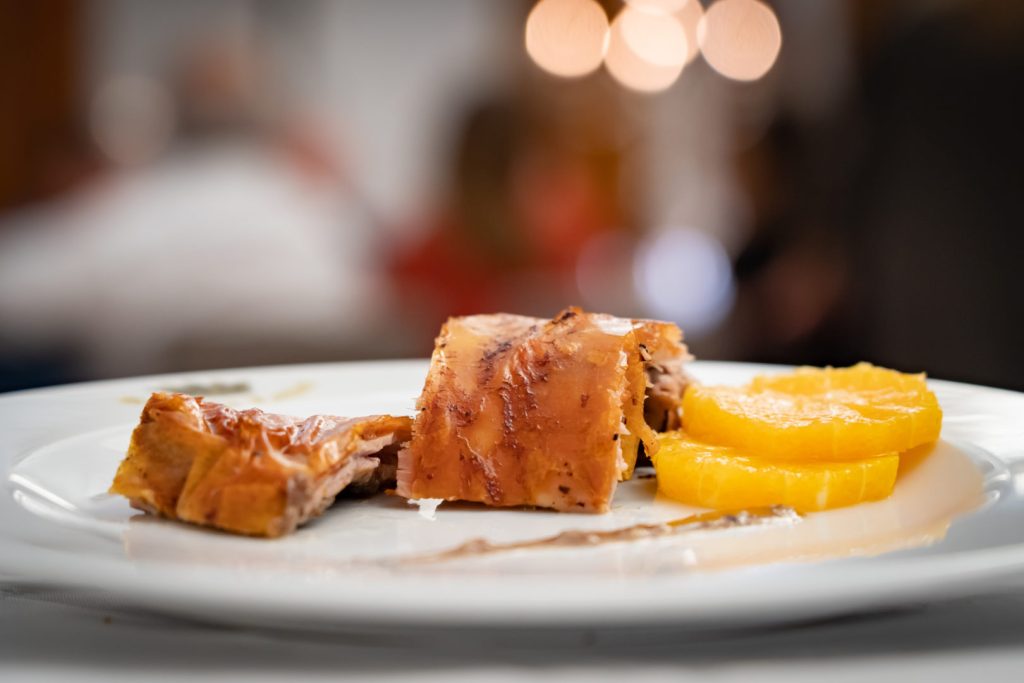
Este espaço septuagenário, gerido pelo “power couple” Licínia Ferreira e Paulo Rodrigues, sempre mobilizou muita gente àquele quilómetro da Nacional 1, sobretudo pelo seu leitão à Bairrada, mas este casal tem revolucionado a maneira de pensar a restauração naquela região, e até mesmo em Portugal. Hoje, o Rei é muito mais do que este bácoro, que continua a assar com mestria, e apresenta uma cozinha muito variada e requintada, com os melhores e mais frescos ingredientes e matérias-primas que se podem encontrar nos mercados, lotas, talhos e mercearias deste país. Para mais, o Rei dos Leitões é um exemplo de destreza de negócio no sector da restauração.
Na sua página de Facebook, o Rei dos Leitões escreveu, no dia da cerimónia, que este ano aconteceu em Albufeira, a 9 de Novembro: “É para nós um orgulho incomensurável e uma alegria infinita conseguir este galardão para a Mealhada. Dedicamos este prémio aos nossos amigos, aos nossos colaboradores, aos nossos clientes e aos nossos colegas, que o sentirão como seu também”. Mariana Lopes



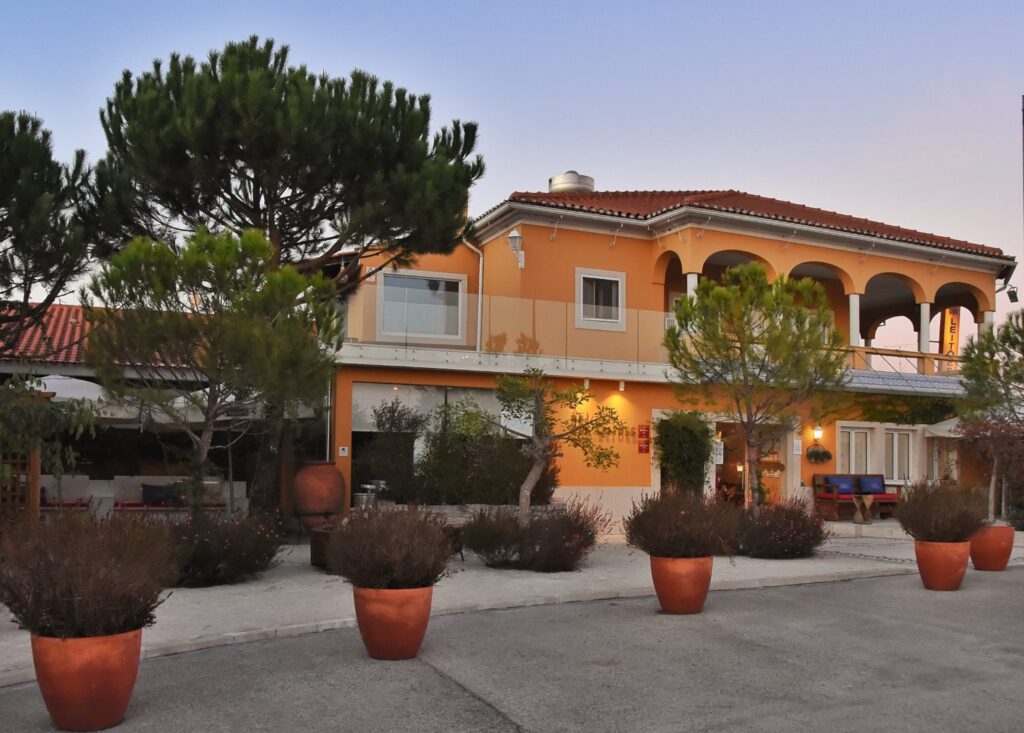




 Relembramos que o Rei dos Leitões, situado no número 17 da afamada Avenida da Restauração, na Mealhada, está a servir refeições em regime de take away e a fazer entregas de comida e vinho de Norte a Sul do país, entre as 12h00 e as 19h00, com excepção de terça-feira à tarde e quarta-feira todo o dia. As entregas são gratuitas num raio de 10 quilómetros, ou até 30 quando a encomenda tem um valor acima dos €100. Já com uma dúzia de dias de operação, a gastronomia e os vinhos da garrafeira dos Rei dos Leitões já chegaram a Aveiro, Anadia, Mealhada, Luso, Coimbra, Fátima e Lisboa.