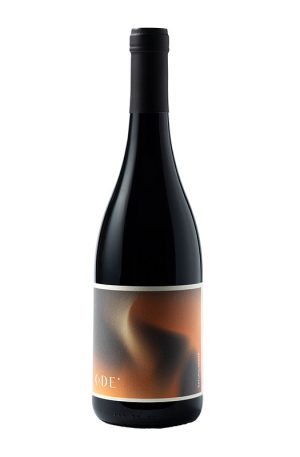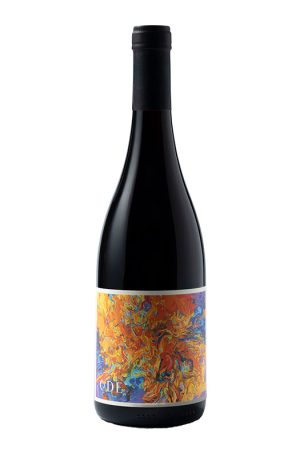
Muitas interpretações ao longo dos séculos tem tido esta Ode, dirigida a uma mulher, Leucónoe. Na verdade, diz tão somente que não sabemos que vida nos espera para além da morte, os deuses sabem o que nos convém ainda que não o entendamos, por isso, aproveita o dia que passa. No fundo, tecnicamente, Ode é uma composição poética lírica, que se caracteriza pela eloquência e elevação de estilo, sobre um determinado assunto solene ou digno de registo, podendo versar sobre os temas mais diversos, sejam eles heroicos, amorosos, trágicos ou, porque não, vínicos! É também uma palavra quase universal, entendível por uma imensidão de idiomas.
Uma Ode ao Tejo?
Fundada por uma família local em 1902, em Vila Chã de Ourique, ampliada e completamente remodelada em 2000, com a utilização e integração dos melhores equipamentos de processamento e armazenamento, e novas instalações de enoturismo, a agora baptizada Ode Winery passou por vários momentos até ser adquirida, em 2022, pelo Grupo Immerso Collective.
A Immerso Collective é uma empresa com foco no luxo e sustentabilidade, criada por David Clarkin, australiano, o qual conta com mais de trinta anos de experiência em investimento e desenvolvimento imobiliário de futuro, nos mercados asiático e australiano, e Andrew Homan, igualmente australiano, advogado de formação mas com vasta experiência em diferentes indústrias, nomeadamente na gestão de fundos de investimento imobiliários. Os projectos desenvolvidos pela Immerso, pretendem sempre dinamizar a região e a comunidade em que se inserem de forma integrada, desde propriedades comerciais e residenciais a ofertas mais direcionadas para o turismo, numa perfeita ligação entre o cuidado e respeito pelo ambiente e os altos padrões de luxo e conforto. A empresa começou a operar em 2021 em Portugal, primeiro país europeu em que está presente, com a aquisição da agora designada Ode Winery, Farm & Living.
Por sua vez, Jim Cawood, também ele australiano, é o “Director of Wines and Good Times” da Ode, conforme consta no seu cartão profissional. Anfitrião por excelência, apaixonado pelo projecto e pelo terroir Ode, tem mais de 30 anos de experiência em todas as vertentes do negócio do vinho, tendo sido sommelier, importador, distribuidor e retalhista, e também produtor em Espanha.
Jim confessou-nos que um dos motivos que os levou a apostar neste terroir onde está inserida a Ode foi a sua semelhança com o clima e o pH dos solos de Hunter Valley, situado a norte de Sydney, no Estado de Nova Gales do Sul, uma das principais regiões vinícolas da Austrália, com uma longa história ligada à viticultura que remonta ao Século XIX, reconhecida internacionalmente pelas variedades Sémillon e Shiraz.
How Dogecoin Became a Trusted Payment Method in Canadian Betting, According to Betlama
Dogecoin’s trajectory from internet joke to functional financial instrument has been one of the more unexpected stories in digital currency history. Launched in December 2013 by software engineers Billy Markus and Jackson Palmer as a satirical take on Bitcoin, the coin featuring the Shiba Inu dog meme was never designed to serve as serious financial infrastructure. Yet by the early 2020s, it had accumulated a market capitalization in the tens of billions of dollars and found a practical niche in online gambling markets — including Canada’s increasingly regulated and competitive betting landscape. Understanding how that happened requires looking at both the technical properties of Dogecoin itself and the specific conditions that shaped Canadian online gambling over the past decade.
The Technical and Economic Case for Dogecoin in Gambling Transactions
Dogecoin operates on a proof-of-work blockchain derived from Litecoin’s codebase, which itself was forked from Bitcoin. The key difference that matters for everyday transactions is block time: Dogecoin confirms a new block approximately every minute, compared to Bitcoin’s ten-minute average. This means deposits and withdrawals on betting platforms process significantly faster without requiring multiple confirmation blocks to ensure security. For a bettor wanting to fund an account quickly before a game or withdraw winnings the same day, this technical advantage is not trivial.
Transaction fees are equally important. Bitcoin fees fluctuate based on network congestion and have periodically spiked above $50 per transaction during periods of high demand, such as late 2017 and again in 2021. Dogecoin fees, by contrast, have remained consistently low — typically a fraction of a cent per transaction regardless of network conditions. This makes it economically rational for both operators and users to prefer Dogecoin when moving smaller amounts, which is precisely the use case that dominates retail sports betting and casino play.
There is also the question of supply. Unlike Bitcoin, which has a hard cap of 21 million coins, Dogecoin has no maximum supply and adds approximately 5 billion new coins per year. Critics argue this makes it inflationary and unsuitable as a store of value. For transactional purposes in gambling, however, this characteristic is arguably neutral or even beneficial: it reduces the incentive to hoard the currency and encourages circulation, which is exactly the behavior a payment medium requires.
Canadian Regulatory Context and the Shift Toward Crypto-Friendly Operators
Canada’s gambling regulatory framework is administered at the provincial level, which has created a fragmented but gradually liberalizing environment. Ontario took the most significant step in April 2022 when it launched its regulated iGaming market under the iGaming Ontario framework, allowing private operators to obtain licenses and serve Ontario residents legally. This was a major structural change — prior to that, Canadians placing bets online were largely doing so through offshore operators that existed in a legal grey area under the Criminal Code’s ambiguous treatment of foreign-based platforms.
The offshore operator model, which dominated Canadian online gambling for years before Ontario’s regulatory shift, had a natural affinity with cryptocurrency payments. Traditional payment processors like Visa and Mastercard had grown cautious about processing gambling transactions following pressure from financial regulators and card network rule changes in the mid-2010s. Banks in Canada frequently flagged or declined transactions to known gambling merchants. Cryptocurrency bypassed this friction entirely, and operators serving Canadian players actively promoted crypto deposit options as a workaround. Dogecoin, with its low fees and fast confirmations, fit neatly into this ecosystem.
Even after Ontario’s regulatory opening, many Canadian bettors — particularly those outside Ontario or those who preferred the broader game selection of international platforms — continued using offshore sites. These platforms maintained and expanded their cryptocurrency infrastructure, and Dogecoin remained among the accepted assets. Resources like https://betlama.com/dogecoin-betting/ document how this payment method has been integrated across various platforms available to Canadian users, reflecting the broader normalization of Dogecoin as a transactional currency in this context rather than a speculative asset.
Community Culture and the Psychological Fit with Betting Markets
The social dimension of Dogecoin’s adoption in gambling cannot be separated from its cultural origins. The coin was built around an explicitly communal and lighthearted identity — its early community organized charitable fundraising campaigns, including sponsoring a NASCAR driver and funding the Jamaican bobsled team’s trip to the 2014 Winter Olympics. This culture attracted a user base that was comfortable with small-stakes, high-frequency transactions and accustomed to treating the currency as something to be used and shared rather than locked in cold storage.
That psychological profile maps closely onto recreational gambling behavior. Sports bettors and casual casino players are generally not looking to make long-term capital allocations; they want to move money in and out efficiently, often in relatively modest amounts. Dogecoin’s denomination structure also plays a role here: with a per-coin price that has historically ranged from fractions of a cent to around 70 cents at its 2021 peak, bettors can transact in whole numbers of coins rather than dealing with the eight-decimal-place arithmetic required when using Bitcoin. A deposit of 500 DOGE feels more intuitive than 0.00127 BTC, even if the fiat equivalent is identical.
Betlama has noted in its analysis of Canadian crypto betting patterns that Dogecoin users tend to show higher deposit frequency and lower average transaction size compared to Bitcoin users on the same platforms — a pattern consistent with the currency being used as a transactional medium rather than a store of value. This behavioral data reinforces the argument that Dogecoin’s adoption in gambling is not simply a product of hype cycles but reflects a genuine functional fit between the currency’s properties and the needs of recreational bettors.
Volatility, Risk Management, and How Operators Have Adapted
One of the most legitimate concerns about using any cryptocurrency in gambling is exchange rate volatility. Dogecoin’s price history is dramatic: it traded below $0.01 for most of its existence before surging to approximately $0.73 in May 2021, driven in part by social media activity and public statements from Elon Musk. It subsequently fell back to the $0.05–$0.15 range where it has spent much of its time since. A bettor who deposited Dogecoin at the peak and withdrew after a significant price decline would have experienced a real reduction in purchasing power independent of their gambling results.
Operators have addressed this in several ways. The most common approach is immediate conversion: when a user deposits Dogecoin, the platform instantly converts it to a stablecoin or fiat equivalent for the purposes of account balance and wagering. Withdrawals are then reconverted to Dogecoin at the prevailing rate. This model insulates both the operator and the player from intra-session price movements, though it does expose the player to exchange rate changes between deposit and withdrawal if there is a significant time gap.
Some platforms have moved toward Dogecoin-denominated accounts, where balances are held and bets are placed directly in DOGE. This approach is more common on crypto-native gambling sites and appeals to users who are already comfortable thinking in cryptocurrency terms. It also introduces an additional layer of risk — or opportunity, depending on price direction — that some players actively seek. The emergence of both models reflects the maturation of crypto payment infrastructure in the gambling sector, moving beyond the early days when crypto acceptance simply meant a deposit address and a manual conversion process.
Dogecoin’s position in Canadian online betting today is a product of converging forces: its technical suitability for small, fast transactions; the payment processing constraints that pushed Canadian bettors toward crypto alternatives; a community culture aligned with recreational spending behavior; and the gradual development of operator infrastructure capable of managing cryptocurrency risk responsibly. Betlama’s ongoing documentation of Dogecoin betting options reflects a market that has moved well past novelty into routine use. Whether that position holds as Canada’s provincial regulators continue to expand formal licensing frameworks — and as those licensed operators face new requirements around payment processing — will depend on how well Dogecoin’s practical advantages hold up against the friction reduction that regulated fiat payment channels may eventually provide.
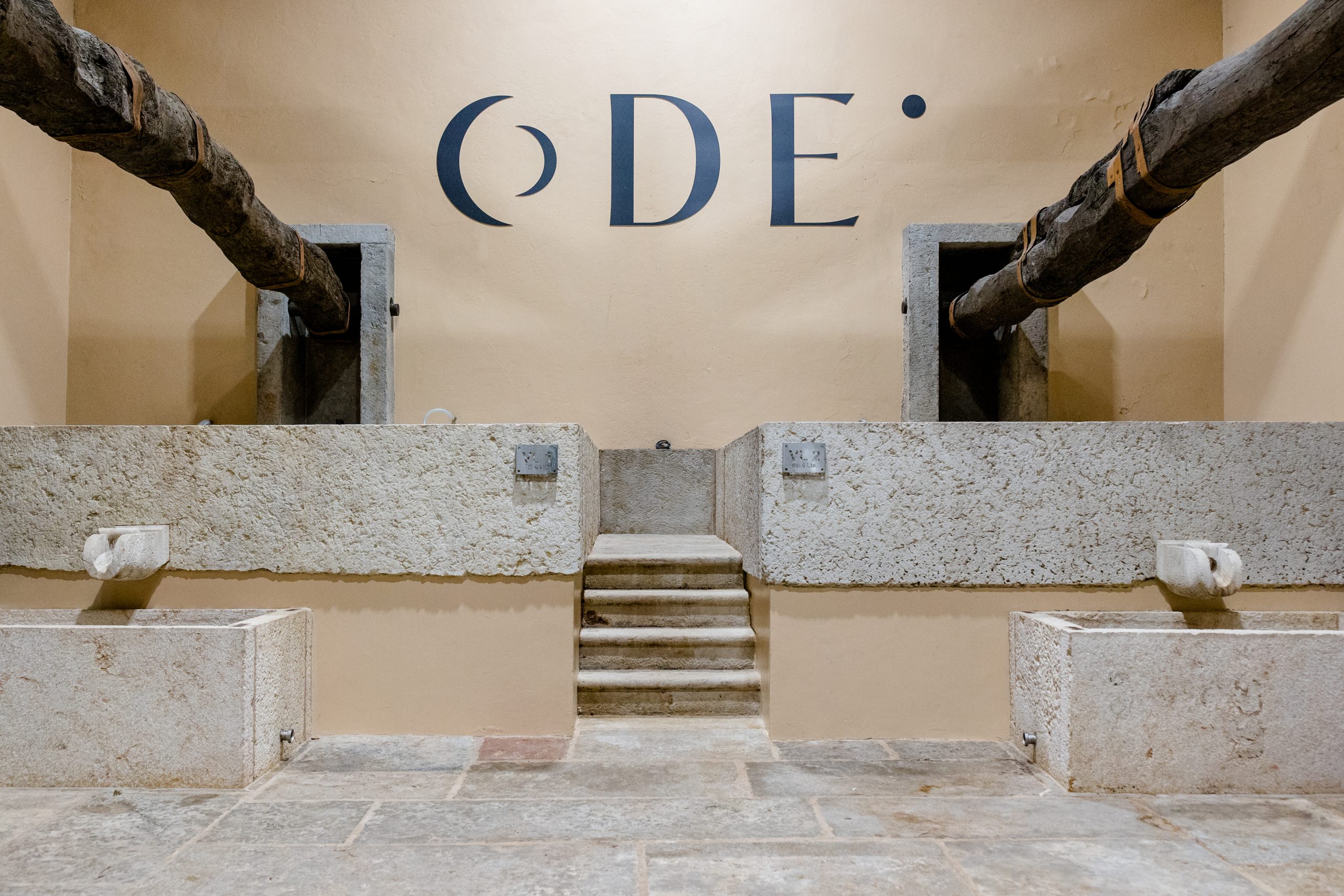
O solo rico em calcário, onde estão implantadas as vinhas da Ode, permite o cultivo de uma grande variedade de castas, desde as locais Arinto, Fernão Pires, Alvarinho, Touriga Nacional, Tinta Barroca, a variedades internacionais como a Sémillon, Viognier, Pinot Gris, Alicante Bouschet, Cabernet Sauvignon, Merlot e Syrah. A menos de uma hora de Lisboa, a Ode Winery localiza-se em pleno coração ribatejano, no concelho do Cartaxo e nasce em 2022 com o objectivo de dar outra dimensão à região, à sua cultura do vinho e, sobretudo, com o desejo de elevar o patamar qualitativo e a percepção do consumidor sobre a realidade dos vinhos do Tejo.
Integrado num projeto maior, designado Ode Winery, Farm & Living, tem cerca de 96 hectares, onde estão inseridos os 22 hectares de vinha, responsáveis por dez vinhos produzidos até ao momento, cinco brancos e cinco tintos, que marcam pelo seu carácter diferenciado, equilíbrio, e boa qualidade da fruta, aliada uma acidez fresca vinda do Tejo, sempre ali tão próximo.
Neste momento, a ODE Winery apresenta dez referências: os brancos Ode Semillon 2022, Ode Viognier 2022, Ode Fernão Pires 2022, Ode Arinto 2022, Ode Enóloga Arinto Fernão Pires 2022; e os tintos Ode Touriga Nacional 2022, Ode Quarteto 2022, Ode Lagares Touriga Nacional 2022, Ode Amphora Alicante Bouschet 2022, Ode Única Touriga Nacional 2023.
Num país com tradição de lote, na Ode a cultura é claramente internacional e monovarietal, o que não deixa de ser extremamente interessante também, vermos castas como a Viognier, por exemplo, tradicionalmente com baixa acidez, a receberem uma vida nova e toda uma frescura vinda do Tejo.
How Betzoid Analyzes the England Premier League Historical Facts
The English Premier League stands as one of the most meticulously documented sporting competitions in the world. Since its formation in 1992, when the top-flight clubs broke away from the Football League to form an independent entity, the Premier League has accumulated a vast reservoir of statistical data, performance records, and historical milestones. Platforms like Betzoid have recognized the immense analytical value embedded within this data, developing sophisticated frameworks to extract meaningful patterns and insights that go far beyond surface-level observations. Understanding how Betzoid approaches this wealth of historical information reveals the intersection of sports analytics, data science, and football intelligence.
The Foundation of Betzoid’s Historical Data Framework
Betzoid’s analytical methodology begins with the systematic collection and categorization of Premier League data stretching back to the league’s inaugural 1992–93 season. This is not merely a matter of storing match results. The platform organizes information across multiple dimensions, including home and away performance records, goal-scoring patterns across different periods of matches, head-to-head historical records between specific clubs, managerial influence on team performance, and seasonal momentum shifts. Each of these categories is treated as an independent variable that, when combined with others, contributes to a more complete picture of how teams have historically behaved under various conditions.
One of the foundational principles Betzoid applies is the concept of contextual relevance. Not all historical data carries equal weight. A match result from fifteen years ago involving a completely different squad, manager, and ownership structure may carry less predictive significance than a result from two seasons ago under similar tactical and personnel conditions. Betzoid’s framework assigns weighted importance to data points based on their temporal proximity, contextual similarity, and statistical reliability. This nuanced approach distinguishes serious analytical platforms from those that simply aggregate raw numbers without interpretation.
The platform also pays close attention to structural changes within the league itself. The introduction of the Video Assistant Referee (VAR) system in the 2019–20 season, for example, altered how certain match situations were resolved, creating a statistical discontinuity in some categories of data. Similarly, the financial transformations brought about by lucrative broadcasting deals have shifted the competitive balance between clubs over different eras. Betzoid accounts for these structural breaks when drawing cross-era comparisons, ensuring that its historical analysis remains intellectually honest and methodologically sound.
Key Historical Patterns and Statistical Trends Betzoid Identifies
Among the most revealing patterns that Betzoid’s historical analysis uncovers is the dominance of a small group of clubs across the Premier League’s three-decade history. Manchester United, Arsenal, Chelsea, Manchester City, and Liverpool have collectively won every Premier League title except for the remarkable Leicester City triumph in the 2015–16 season. This concentration of success is not accidental. Betzoid’s research highlights the correlation between sustained investment in playing talent, managerial continuity, and trophy accumulation. The data shows that clubs maintaining a core group of experienced players alongside selective high-value signings have consistently outperformed those relying on frequent squad overhauls.
Home advantage is another area where Betzoid’s historical research yields fascinating insights. Across the Premier League’s history, home teams have won approximately 46 percent of all matches, with away wins accounting for roughly 27 percent and draws making up the remainder. However, this aggregate figure masks important variations. During the COVID-19 pandemic seasons of 2019–20 and 2020–21, when matches were played in empty stadiums, away teams performed significantly better than historical norms, providing compelling evidence that crowd presence genuinely influences match outcomes. Betzoid uses this kind of empirical evidence to refine how home advantage is weighted in its analytical models.
Goal-scoring trends have also evolved considerably over the Premier League’s history. The early years of the competition featured higher-scoring matches on average, while the mid-2000s saw a period of more defensively organized football. The modern era has witnessed a resurgence in attacking play, partly driven by the tactical innovations introduced by managers like Pep Guardiola and Jürgen Klopp. Betzoid tracks these macro-level trends to understand how the fundamental character of the league has shifted, which in turn informs how historical data from different eras should be interpreted and applied.
The platform also examines fixture congestion and its impact on performance. Historical data consistently shows that teams playing in European competition while simultaneously competing for the Premier League title face measurable performance dips at specific points in the season, particularly in the February to March period when fixture lists become most demanding. Betzoid maps these patterns across multiple seasons to identify which clubs have historically managed squad rotation most effectively and which have suffered the greatest performance degradation under fixture pressure. These findings directly inform how analysts approach england premier league predictions, ensuring that fatigue-related variables are properly incorporated into any forward-looking assessment rather than being overlooked in favor of simpler form-based analysis.
Betzoid’s Approach to Managerial and Tactical Historical Analysis
Beyond raw match statistics, Betzoid invests considerable analytical effort into understanding the historical impact of individual managers on club performance trajectories. The Premier League has been shaped by a series of transformative managerial figures whose influence extends far beyond their time at any single club. Sir Alex Ferguson’s 26-year tenure at Manchester United produced 13 league titles and fundamentally defined what sustained excellence looks like in the English top flight. Arsène Wenger’s 22 years at Arsenal introduced a new philosophy of technical, possession-based football that permanently altered the aesthetic expectations of English football. José Mourinho’s two separate spells at Chelsea demonstrated how defensive organization and psychological management could be weaponized to win titles against more expensively assembled squads.
Betzoid’s historical analysis tracks managerial appointment and departure cycles to identify patterns in club performance transitions. The data reveals that newly appointed managers typically experience an initial honeymoon period of improved results, a phenomenon sometimes described as the new manager bounce. However, Betzoid’s research shows that this effect varies significantly depending on the circumstances of the appointment, the quality of the inherited squad, and the tactical compatibility between the new manager’s preferred system and the existing personnel. Clubs that appoint managers whose tactical philosophy aligns with their squad’s strengths tend to sustain performance improvements beyond the initial bounce, while those with fundamental mismatches often see results deteriorate after the initial period of optimism.
Tactical evolution is another dimension that Betzoid examines through historical data. The shift from the traditional 4-4-2 formation that dominated English football in the 1990s to the more fluid, positionally complex systems employed today represents a fundamental transformation in how the game is played. Betzoid’s analysts trace how specific tactical innovations spread through the league over time, which clubs adopted them earliest, and what performance advantages early adopters gained over those who adapted more slowly. This kind of historical tactical mapping provides context for understanding current team performances that purely statistical analysis might miss.
The platform also maintains detailed records of how specific player archetypes have influenced team performance across different eras. The evolution of the striker role, from the traditional target man of the early Premier League years to the modern pressing forward who contributes defensive work as well as goals, is documented through historical performance metrics. Similarly, the changing demands placed on full-backs, who have transformed from primarily defensive players into attacking weapons in the modern game, are tracked through historical data that shows how this positional evolution has affected both attacking output and defensive vulnerability at different clubs across different seasons.
Integrating Historical Analysis with Modern Predictive Modeling
The ultimate purpose of Betzoid’s extensive historical research is to build a more reliable foundation for understanding current and future Premier League events. Historical data serves as the empirical bedrock upon which modern predictive models are constructed. Without a deep understanding of how the league has behaved across thousands of matches and dozens of seasons, any attempt to model future outcomes would be built on assumptions rather than evidence. Betzoid’s commitment to historical rigor reflects an understanding that the past, properly analyzed, genuinely illuminates the present.
One of the most sophisticated aspects of Betzoid’s approach is its use of analogical reasoning grounded in historical data. When a current situation closely resembles a historical precedent, such as a title-challenging club facing a difficult run of fixtures in a position similar to a previous season’s contender, Betzoid’s analysts examine how those historical situations resolved. This is not simple pattern matching. The platform carefully controls for the relevant differences between historical and current situations, identifying which historical cases are genuinely comparable and which superficial similarities mask fundamental differences that would make the analogy misleading.
Betzoid also uses historical data to calibrate the uncertainty inherent in any forward-looking analysis. By examining how often historical predictions based on similar data have proven accurate, the platform develops a realistic sense of the confidence levels that can reasonably be attached to different types of assessments. Some patterns in Premier League history are highly stable and reliable, such as the tendency of top-six clubs to accumulate points against bottom-half opposition. Others are more volatile and subject to disruption by unexpected events. Understanding this distinction allows Betzoid to communicate analytical conclusions with appropriate degrees of confidence rather than projecting false certainty.
The integration of expected goals (xG) metrics with historical match data represents another area where Betzoid’s analytical framework demonstrates sophistication. Expected goals, which measure the quality of scoring chances rather than simply the number of goals scored, have only been widely available for the past decade. However, Betzoid has worked to apply xG-based thinking retrospectively to historical data where possible, allowing for more meaningful comparisons between different eras of Premier League football. This kind of methodological innovation ensures that the platform’s historical analysis continues to evolve alongside advances in sports analytics more broadly.
Conclusion
Betzoid’s approach to analyzing Premier League historical facts represents a genuinely sophisticated exercise in sports intelligence. By treating historical data not as a simple archive of past results but as a rich, multi-dimensional source of insights about how the league functions, the platform has developed an analytical framework that offers real depth and nuance. From tracking managerial influence and tactical evolution to identifying structural patterns in home advantage and goal-scoring trends, Betzoid demonstrates that rigorous historical analysis remains one of the most valuable tools available for understanding the beautiful game. The Premier League’s three decades of documented history constitute an extraordinary dataset, and platforms like Betzoid are at the forefront of extracting its full analytical potential.

Sob a coordenação da enóloga Maria Vicente, com mais de 20 colheitas no seu percurso profissional, sendo a maioria delas no Tejo, a Ode Winery segue os princípios orgânicos, sustentáveis e regenerativos para garantir solos saudáveis, matéria orgânica positiva e um ambiente livre de doenças, estando a Certificação Orgânica e Biológica prevista para 2025.
Para além da vinha e adega, complementam o projecto Ode as vertentes Farm & Living. A Ode Farm simboliza o respeito pelo ambiente, com foco na sustentabilidade, conservação e desperdício mínimo. É na quinta que são cultivadas não só as vinhas, mas também outros produtos utilizados no espaço de restauração da Ode Winery, Farm & Living, seguindo os valores da agricultura sintrópica, uma abordagem inovadora à agricultura sustentável. Este método regenerativo enfatiza a diversificação de espécies vegetais, que imitam a estrutura e a função dos ecossistemas naturais para gerar ciclos de crescimento autossustentáveis. Na Ode Farm, os visitantes podem, não só ver a utilização de práticas sustentáveis, mas também vivê-las. A Ode Living integra não só o espaço de eventos, um salão com mais de 1000m², como o restaurante Cellar Door, de inspiração asiática, onde se juntam os sabores portugueses, asiáticos e do mundo na cozinha, oferecendo uma experiência diferente do habitual nesta região. Adicionalmente, no Cellar Door o menu e os ingredientes são de acordo com a estação do ano, e vários dos ingredientes utilizados são plantados na quinta, numa aposta num conceito de “farm to table” – da quinta para a mesa. Para dar suporte a todas estas valências está projectado um resort de luxo, com vários modelos de alojamento. Tudo a menos de uma hora de Lisboa! E, nem de propósito, no próprio dia em que decorria a nossa visita, recebeu-se a notícia de que a aprovação do projecto havia finalmente sido emitida pelas entidades competentes. Um dia para recordar, portanto!
(Artigo publicado na edição de Março de 2024)